Designing a Modern Kitchen: Blending Finishes and Textures in a Victorian Lakeside Home
Creating a kitchen that combines a variety of finishes, colors, textures, and materials can be a challenge, especially when working within the character of a Victorian-era house. This project involved designing a modern kitchen for a client who wanted to bring a fresh, contemporary feel to their lakeside Victorian home. The goal was to balance the old with the new, blending diverse elements into a cohesive and functional space.

Understanding the Client’s Vision
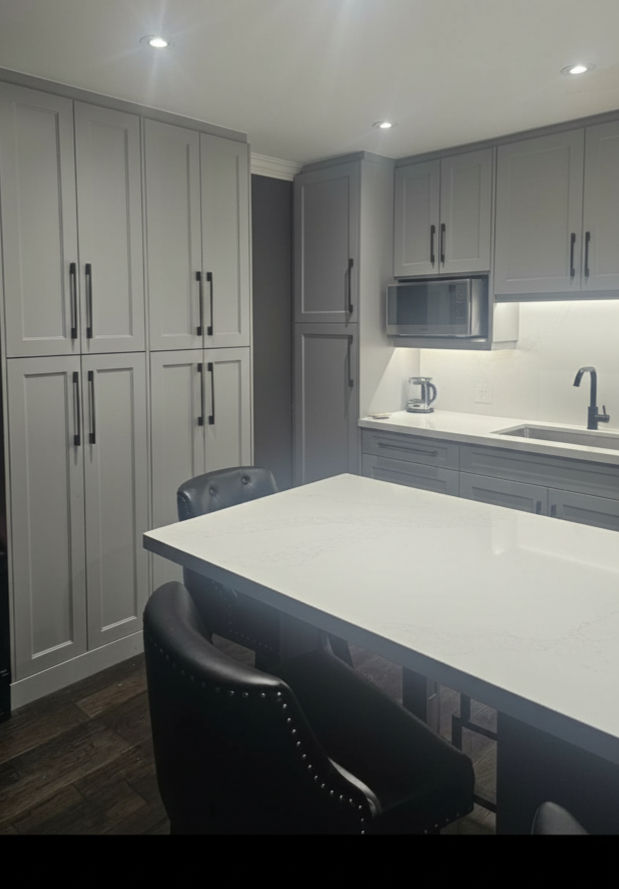
The clients had a clear idea of what they were looking for: they wanted a kitchen that felt modern but respected the home’s historic roots. They selected an assortment of finishes and materials that included matte black fixtures, warm wood tones, white cabinetry, and unpolished quartz countertops. The challenge was to integrate these elements without creating visual clutter or losing the home’s charm.
This meant the design had to be thoughtful and deliberate. Each finish and texture needed to complement the others while contributing to the overall aesthetic. The kitchen had to feel inviting and practical, with a nod to modern trends but also a subtle connection to the Victorian style.
Choosing the Right Color Palette
Color plays a crucial role in tying together different materials and finishes. For this kitchen, the palette was kept neutral but interesting:
Soft whites and creams for the cabinetry to brighten the space and provide a clean backdrop.
Deep charcoal and matte black for hardware and fixtures to add contrast and a modern edge.
Warm wood tones in a ribbed/textured profile In the bar area and on the bar side of the pennisula adds to the modern theme of the kitchen, while adding texture and warm tones.
This combination allowed the kitchen to feel fresh and modern while maintaining a connection to the home’s natural surroundings and historic character.
Balancing Textures for Visual Interest
Texture adds depth and design appeal, which is essential when mixing multiple finishes. The kitchen design incorporated:
Smooth, lacquer finished cabinetry surfaces that catch light and create a sleek look.
Unpolished stone countertops with natural veining to add organic detail.
Matte black metal fixtures that provide a soft, understated finish against the other materials.
By balancing smooth and rough textures, the kitchen avoids feeling flat or overly uniform. Each surface invites touch and adds a layer of complexity to the design.
Practical Tips for Mixing Finishes and Materials
When designing a kitchen with multiple finishes and textures, keep these tips in mind:
Limit the number of finishes to three or four to avoid visual chaos, this includes hardware, appliances and sink faucet.
Use repetition to create unity, such as repeating a wood tone in both flooring and shelving.
Balance warm and cool tones to keep the space inviting but fresh.
Consider scale and proportion so that large surfaces don’t overwhelm smaller details.
Test samples together in the actual space to see how light affects colors and textures.
These strategies help create a balanced and harmonious kitchen design.

Final Thoughts on Blending Styles in a Historic Home
This kitchen exemplified how to modernize an older home effectively. Although these finishes might not appeal to everyone, they harmonized in this space to incorporate all the elements the clients wanted: textured stained wood, sleek white cabinets, and natural-looking unpolished quartz. We enjoy projects that allow us to think creatively, blending modern and traditional elements.

Comments